Source Moisture Proof Coffee Packaging Bag for Powder, Beans, and Candy
Find 30 verified options for Moisture Proof Coffee Packaging Bag designed for powder, coffee beans, and candy. Compare features like zipper closure, heat seal, and recyclable materials from suppliers in Hebei and Guangdong to find the right fit for your needs.
Key considerations
Products List


Premium Flat Bottom Coffee Pouch Moisture Resistant Packaging Bags for Coffee
$0.01 - $0.05
MOQ: 1000 Pieces


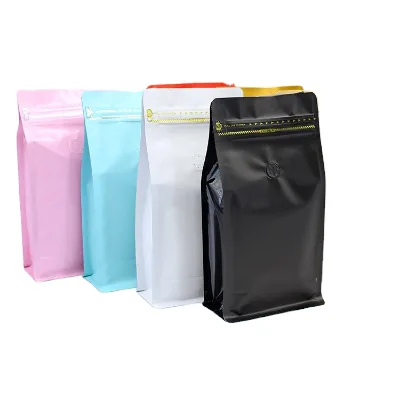

Plastic Coffee Bag for Packaging with Valve and Customizable Dimensions
$0.04 - $0.70
MOQ: 20000 Pieces


Durable Wear-Resistant Coffee Bag with Customizable Size and Color Options
$0.04 - $0.70
MOQ: 20000 Pieces

Wear-Resistant Recyclable Coffee Packaging Bags with Customized Design
$0.05 - $0.07
MOQ: 20000 Pieces


Comprehensive Sourcing Guide
Strategic Sourcing Guide for Moisture Proof Coffee Packaging Bags
Selecting the right packaging solution for coffee beans requires a meticulous balance between preserving product integrity and managing supply chain logistics. The core requirement for this category is a moisture-proof barrier that protects the volatile aromatic compounds within coffee beans from degradation. Based on current market observations, buyers are navigating a landscape defined by specific material compositions, sealing technologies, and customization capabilities. This guide outlines the critical factors for sourcing moisture-proof coffee packaging bags, ensuring that procurement decisions are grounded in verified product attributes and industry standards rather than unverified marketing claims.
Material Composition and Barrier Properties
The fundamental defense against moisture and oxygen is the material structure of the bag. In the observed market, the primary material category identified is plastic, specifically utilizing high-pressure polyethylene (PE) or composite structures. A critical distinction exists between single-layer plastic bags and multi-layer composite packaging bags. The composite option, often described as a "composite packaging bag," typically integrates layers such as PET (Polyethylene Terephthalate), Aluminum foil (Al), and PE. This tri-layer structure is essential for high-performance moisture proofing, as the aluminum layer provides an absolute barrier against light, oxygen, and moisture, which are the primary enemies of coffee freshness.
Buyers must verify the specific raw materials listed in the supplier's technical data sheet. While some products are described simply as "Plastic" or "High Pressure Polyethylene Plastic Bag," others specify the "PET/Al/PE" configuration. The presence of an aluminum layer is a strong indicator of superior barrier properties required for long-term storage. Conversely, bags made solely of PE may offer basic moisture resistance but often lack the oxygen barrier necessary for premium coffee beans. The material choice directly influences the bag's ability to maintain the "Moisture Proof" and "Waterproof" attributes observed in the product listings. When evaluating suppliers, request a breakdown of the lamination layers to ensure the aluminum content is sufficient for the intended shelf life of the product.
Sealing Mechanisms and Structural Integrity
The method of sealing is just as critical as the material itself. The market data highlights two primary sealing and handle configurations: "Zipper Closure" and "Heat Seal." For coffee packaging, the choice often depends on the product lifecycle. A "Zipper Top" or "Zipper Closure" offers re-sealability, which is highly valued for retail consumers who may not consume the entire bag in one sitting. This feature helps maintain the internal environment after the initial opening. However, for bulk industrial shipments or single-use applications, a "Heat Seal" provides a permanent, hermetic closure that is often more robust against leakage and puncture.
The structural shape of the bag also plays a role in integrity. Listings indicate options ranging from "Upright Bag" to "Square Bottom Bag" and "Paper Bag" shapes. Square bottom bags are particularly advantageous for coffee as they provide a stable base for retail shelving and maximize shelf space. The "Upright Bag" design is common for convenience and ease of filling. Buyers should ensure that the chosen shape is compatible with their filling machinery. Furthermore, the "Sealing & Handle" attribute must be scrutinized; some bags include integrated handles for carrying, while others rely on the heat seal for closure. The integrity of the zipper track or the heat seal line must be tested to ensure it does not fail under the weight of the coffee beans or during transit.
Customization Capabilities and Design Flexibility
In the competitive coffee market, branding is a significant differentiator. The observed data confirms that "Custom Order" is widely accepted, with suppliers offering extensive design flexibility. Key customization attributes include the ability to accept "Customized Logo" printing, "Custom Colors" (up to 10 colors), and "Custom Shapes." The surface printing process identified is "Gravure Printing," which is a high-quality method capable of producing detailed, vibrant graphics suitable for premium packaging.
When engaging with suppliers, buyers should verify the "Design" service level. Some suppliers state that design is "Depend on Your Demand," while others explicitly offer "Service Provided." This distinction is crucial for buyers who may not have in-house graphic design resources. Additionally, the "Product Name" is often generic (e.g., "Coffee Bag"), but the "prod_model" (such as ES-000203431-C or 007) serves as a unique identifier for specific configurations. Buyers must ensure that the customization options do not compromise the barrier properties of the bag. For instance, heavy ink coverage or specific lamination finishes could potentially affect the sealability or the moisture-proof performance if not applied correctly. The "Standard" is noted as "Customizable," which implies that the physical dimensions and material thickness can be tailored to specific needs, provided the supplier has the necessary tooling and production capacity.
Compliance, Certification, and Regulatory Standards
Ensuring that packaging meets food safety standards is non-negotiable for coffee products. The observed market data lists several certifications, including "ISO," "BRC," "ISO9001:2008," "HACCP," and "QS." These certifications indicate that the supplier adheres to specific quality management systems and food safety protocols. The "BRC" (British Retail Consortium) and "HACCP" (Hazard Analysis and Critical Control Points) are particularly relevant for international trade, as they are recognized standards for food safety management.
However, buyers must exercise caution regarding certification claims. While the data lists these certifications, the specific scope and validity dates should be verified directly with the supplier. Some listings mention "FSC" and "CE" as low-confidence background items; these should not be assumed to be present without explicit confirmation. For coffee packaging, the primary concern is that the materials used (such as the PE or PET layers) are food-grade and do not leach harmful substances into the product. The "Certificate" attribute should be cross-referenced with the specific product model. A supplier may hold an ISO9001:2008 certification for their general operations, but the specific coffee bag model must be verified to be compliant with local food contact regulations in the destination market.
Cost Drivers and Procurement Economics
The economics of sourcing coffee packaging are influenced by several variables, including material costs, customization complexity, and order volume. The observed price range in the market is quite low, ranging from $0.01 to $0.70 USD per unit, but this range is highly dependent on the specific configuration. The "MOQ" (Minimum Order Quantity) is a significant cost driver, with observed ranges spanning from 500 to 50,000 units. A specific listing notes an MOQ of 10,000 to 20,000 pieces, which suggests that smaller orders may incur higher per-unit costs or may not be feasible for certain high-performance composite bags.
The "Delivery" lead time is another critical factor in the total cost of ownership. The observed lead time is consistently between 18 and 25 days, contingent on the quantity ordered. This timeframe must be factored into inventory planning to avoid stockouts. The "Price Term" is listed as "CIF or Fob Jiangmen," indicating that the cost structure varies based on the Incoterms selected. Buyers must calculate the total landed cost, including freight, insurance, and duties, rather than focusing solely on the unit price. Additionally, the "prod_packing" method, described as "PE Bag+ Carton + Pallet," affects shipping efficiency and potential damage during transit. Optimizing the pallet configuration can reduce shipping costs, especially for large volume orders.
Supplier Evaluation and Quality Control Protocols
Selecting a reliable supplier requires a rigorous evaluation process beyond checking the listed attributes. The "Place of Origin" is noted as "Hebei, China" and "Guangdong China (Mainland)," indicating that suppliers are concentrated in these manufacturing hubs. Buyers should verify the specific factory location to assess logistics capabilities and potential supply chain risks. The "Brand Name" "Honghaipacking" appears in the data, but buyers should not limit their search to a single entity; rather, they should use such names as examples of the type of branding present in the sector.
Quality control is paramount for moisture-proof bags. Buyers should implement a multi-stage QC process. First, verify the "Raw Materials" upon receipt to ensure they match the ordered specifications (e.g., confirming the presence of the aluminum layer). Second, conduct seal strength tests to ensure the "Heat Seal" or "Zipper Closure" can withstand the pressure of the coffee beans and handling stress. Third, perform moisture barrier tests, such as water vapor transmission rate (WVTR) testing, to validate the "Moisture Proof" claim. The "Feature" list includes "Recyclable" and "Bio-Degradable" in some contexts, but these claims require specific verification as they often depend on the exact material blend and local recycling infrastructure. Buyers should request third-party test reports to substantiate these environmental claims before committing to large orders.
Long-Term Procurement and Sustainability Considerations
As the industry evolves, sustainability is becoming a key procurement criterion. The observed features include "Recyclable" and "Bio-Degradable" attributes, alongside "Disposable" and "Antistatic" properties. However, the term "Disposable" often conflicts with "Recyclable" in consumer perception, so clarity is essential. The "Color" limit of up to 10 colors suggests that complex multi-color printing is possible, but buyers should consider the environmental impact of inks and lamination processes.
Long-term procurement strategies should focus on building a relationship with suppliers who offer consistent quality and flexible customization. The "Customization" attribute being "Available" suggests that suppliers are willing to adapt to changing market needs, such as new shapes or eco-friendly material shifts. Buyers should also consider the "Design" service provided by the supplier; a partner who can assist with design optimization can help reduce material waste and improve packaging efficiency. Finally, monitoring the "Delivery" consistency over time is crucial. A lead time of 18-25 days is standard, but delays can disrupt production schedules. Establishing clear communication channels and defining penalty clauses for late deliveries in the contract can mitigate these risks. By focusing on verified material properties, robust sealing mechanisms, and certified compliance, buyers can secure a reliable supply chain for their moisture-proof coffee packaging needs.
FAQs
What materials are used for moisture proof coffee bags?
These bags typically use plastic materials like high-pressure polyethylene or composite structures containing PET, aluminum, and PE layers. The aluminum layer provides a critical barrier against moisture and oxygen to preserve coffee freshness.
Which sealing methods are available for these coffee bags?
Available sealing methods include zipper closures for re-sealability and heat seals for permanent hermetic closure. The choice depends on whether the bag is intended for retail use or bulk industrial shipping applications.
Can I request custom shapes and colors for these bags?
Yes, suppliers accept custom orders for shapes, colors, and logos with up to ten colors available. Customization options include square bottom, upright, and paper bag shapes tailored to specific design demands.
What certifications do these manufacturers typically hold?
Manufacturers often hold ISO, BRC, HACCP, and QS certifications to ensure food safety compliance. Buyers should verify specific certificates like ISO9001:2008 to confirm adherence to quality management systems.
How long is the delivery time for custom orders?
The standard delivery time ranges from 18 to 25 days depending on the order quantity. This lead time applies to customized specifications and varies based on the total number of pieces ordered.
What is the minimum order quantity for these bags?
Minimum order quantities typically range from 500 to 50,000 units depending on the supplier and product model. Specific listings indicate MOQs between 10,000 and 20,000 pieces for certain configurations.
Where are these moisture proof bags manufactured?
These bags are primarily manufactured in Hebei and Guangdong regions of China. Suppliers in these locations offer various packaging solutions including composite bags and plastic bags for coffee and food products.